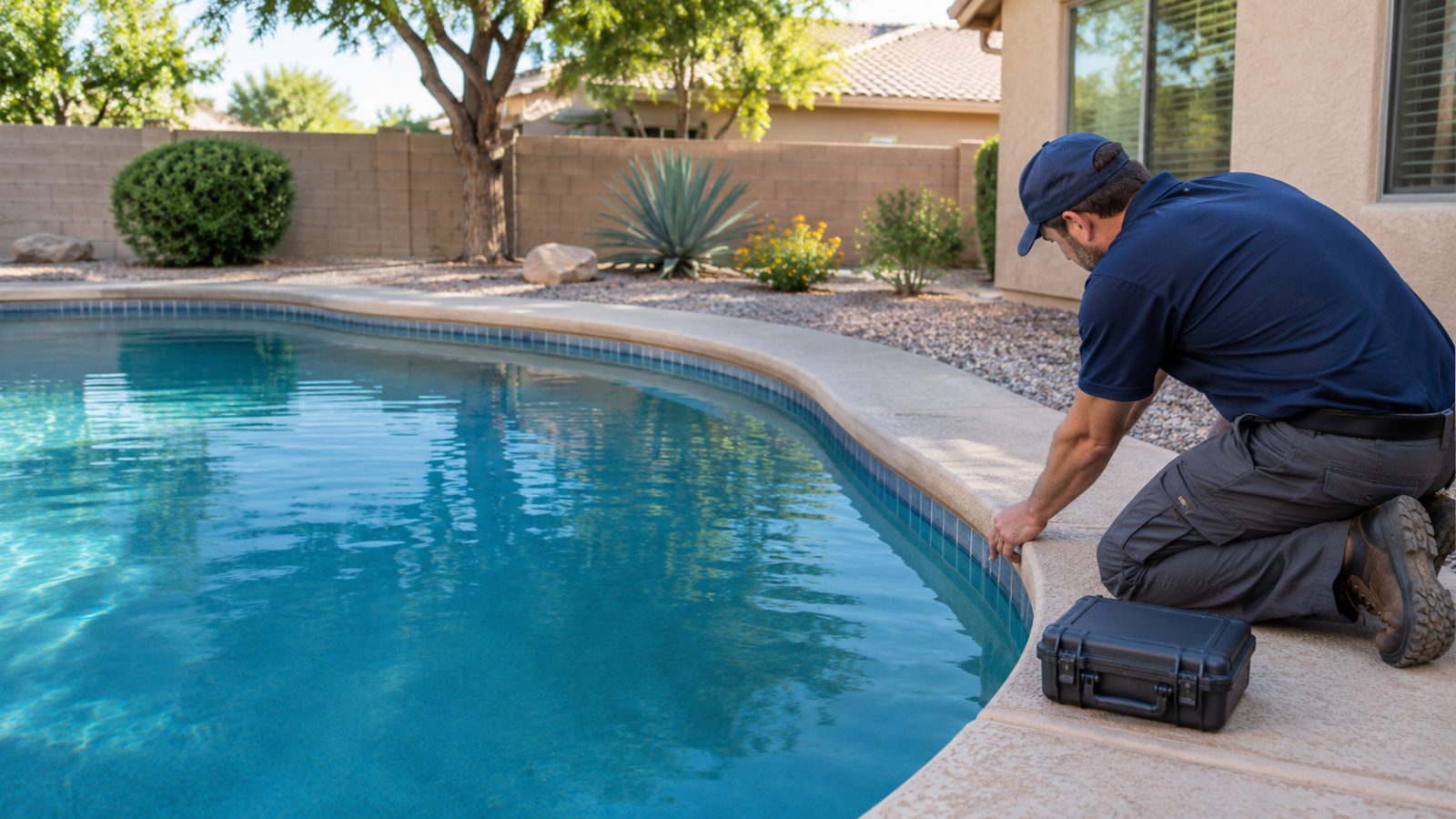
Skimmer and Pool Component Repairs
Pool Skimmer and Component Repair
Fix suspected component leaks with a focused assessment. Get a Free Estimate
Skimmer and Pool Component Repairs
Fix suspected component leaks with a focused assessment. Get a Free Estimate
Your pool skimmer, return fittings, valves, and plumbing connections may seem like small parts of the system, but they all play an important role in keeping water where it belongs. Aging seals, damaged fittings, separated joints, and movement around installed components can create leaks that are difficult to see. Some problems appear near the waterline, while others are hidden behind the pool wall or equipment connections.
Pool Leak Detection Chandler helps identify and evaluate leaks involving pool skimmers and related components. We consider the water-loss pattern, examine accessible parts, and use focused tests when needed. A component problem should be diagnosed before replacing parts or opening surrounding surfaces, particularly when the leak may actually be in connected plumbing.
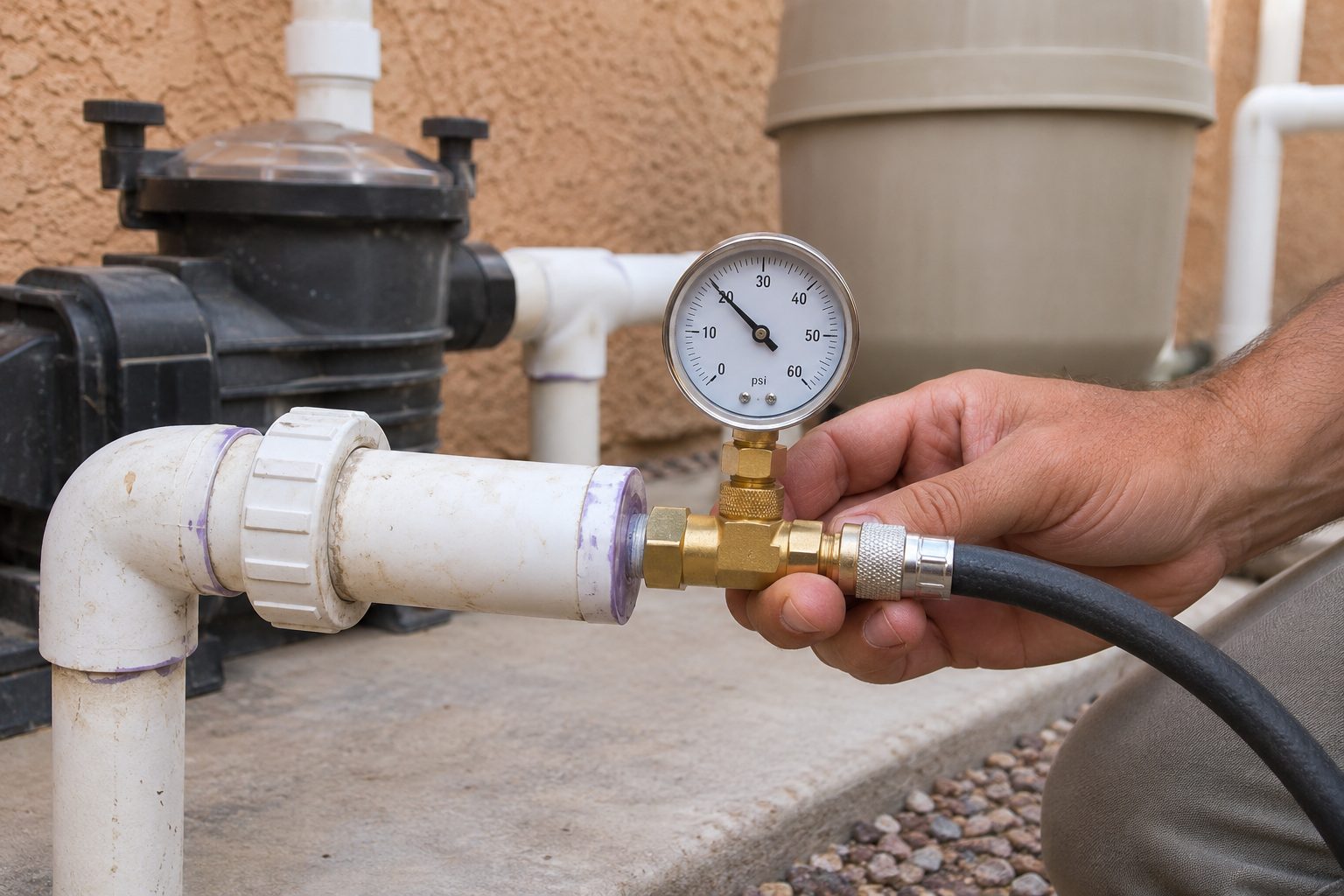
Pool components connect the pool shell to the circulation system. These connection points can experience wear, material changes, and movement over time. In Arizona, sustained heat and long pool operating seasons can make regular inspection especially worthwhile, although a particular failure must still be diagnosed individually. We aim to find out whether the problem is a damaged component, a leaking seal, a connection issue, or something deeper in the plumbing. The repair approach depends on which part is actually allowing water to escape. Replacing a visible part without checking the associated connection can leave the original leak unresolved.
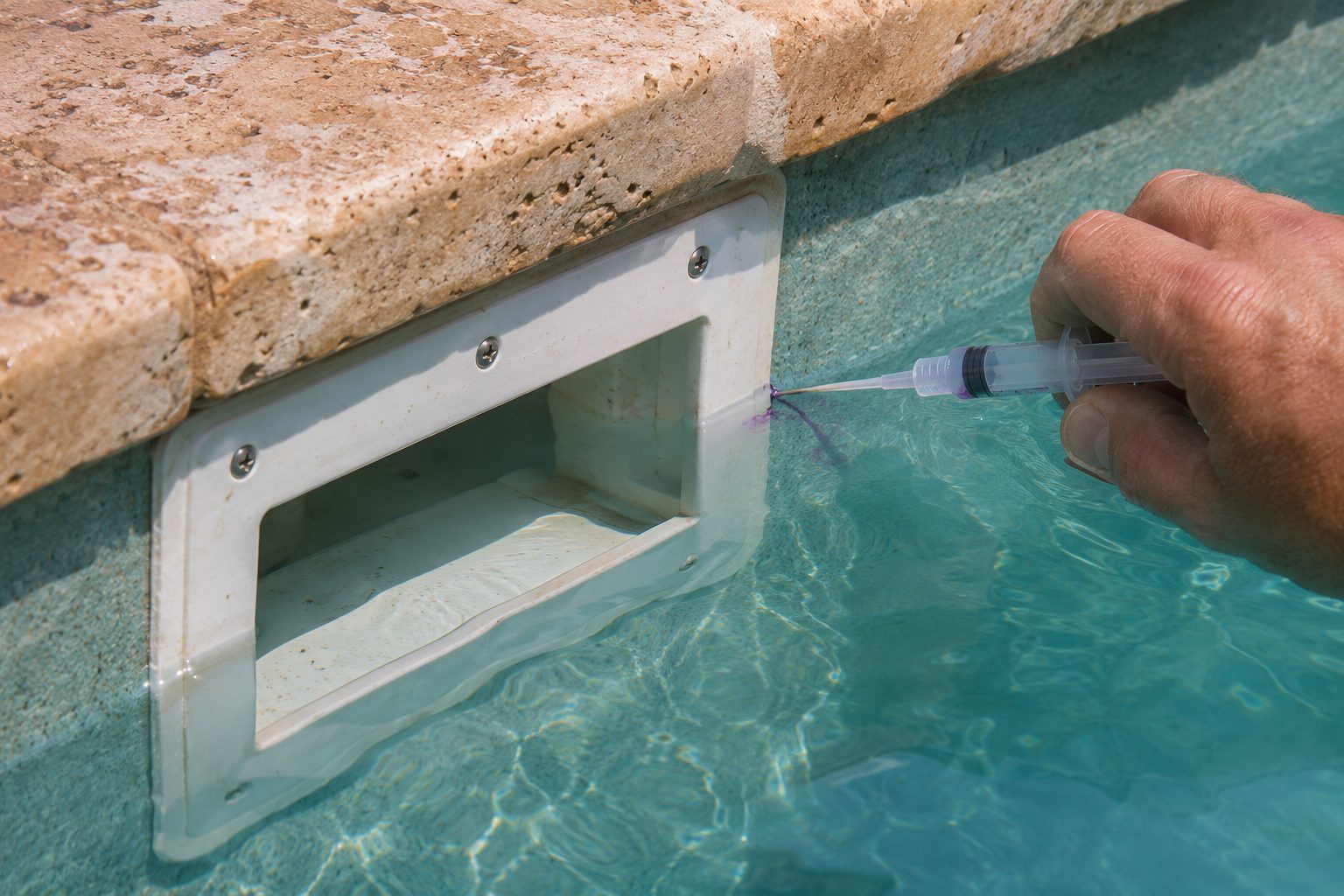
The skimmer collects floating debris and provides a pathway into the pool's circulation system. Its connection to the pool wall, throat, body, and plumbing can all become potential leak locations. A pool that drops toward the skimmer opening may suggest a problem in this area, but the water level alone cannot confirm the cause. We inspect the skimmer and surrounding surfaces for visible defects and use suitable diagnostic methods when appropriate. The goal is to separate a localized skimmer leak from a connected suction-line problem before discussing repair work.
The transition between the skimmer and pool wall may develop gaps or separation. These conditions can be related to aging materials, installation details, or movement. Repairs must consider whether the opening is simply a local water path or a symptom of a more substantial joint problem. We discuss the condition of the joint and whether targeted sealing or additional work is warranted. Proper surface preparation, material compatibility, and the stability of the surrounding area affect the choice of repair method.
Return fittings and other wall-mounted components create penetrations through the pool shell. Leaks can occur around their connections or in associated plumbing. A damaged fitting might be visible from inside the pool, but the leak source can also sit beyond the accessible face of the component. We examine likely failure points and consider dye testing or plumbing evaluation where appropriate. The objective is to confirm what needs attention before unnecessary parts are replaced.
Valves, unions, and equipment connections are exposed to repeated operation and changes in system pressure. A damaged seal or connection can produce intermittent dripping or more noticeable leakage when the pump runs. Equipment pad leaks may also affect nearby soil or surfaces. We review accessible connections and discuss whether a seal, fitting, valve assembly, or related component requires repair. The proper choice depends on the condition of the part and whether the leak is isolated to that location.
Sometimes a damaged component can be repaired in place. Other times replacement makes more sense because the material is cracked, distorted, or otherwise unsuitable for reliable repair. Replacement can also involve connected plumbing or surrounding pool finishes, so the work should be planned rather than rushed. We explain the likely scope and access considerations before the repair is undertaken. For a skimmer or embedded component, this may include discussion of deck or wall access, finish restoration, and the need to confirm that connected lines are sound.
| Service | Estimated Cost | Average |
|---|---|---|
| Skimmer leak assessment | Quoted after symptom review | No fixed average |
| Localized skimmer sealing | Depends on joint and access | No fixed average |
| Return fitting repair | Depends on component condition | No fixed average |
| Valve or connection repair | Depends on parts and labor | No fixed average |
| Embedded component replacement | Custom repair quote | No fixed average |
Repair pricing depends on whether the component can be accessed directly, whether surrounding surfaces need restoration, and whether connected plumbing also requires work. No specific company price or local market average is represented here.
We examine the suspected component and the related connection points before recommending replacement.
Not every leak requires a major rebuild. We discuss targeted repair possibilities when the condition supports them.
A leak near a skimmer or fitting may originate in the plumbing behind it. We consider that possibility during evaluation.
We explain access, potential surface restoration, and relevant component requirements before work proceeds.
Suspect a leaking skimmer, valve, or fitting? Contact us with the symptoms and request an assessment.
Free — no obligations
We review the observed water loss, affected component, and any changes in pool operation.
We examine accessible surfaces, joints, fittings, and connected areas for likely problems.
Focused testing may help distinguish the component from an associated plumbing leak.
We explain the condition, access needs, and practical options.
After repair, appropriate observation or testing helps evaluate whether the identified leak has been addressed.