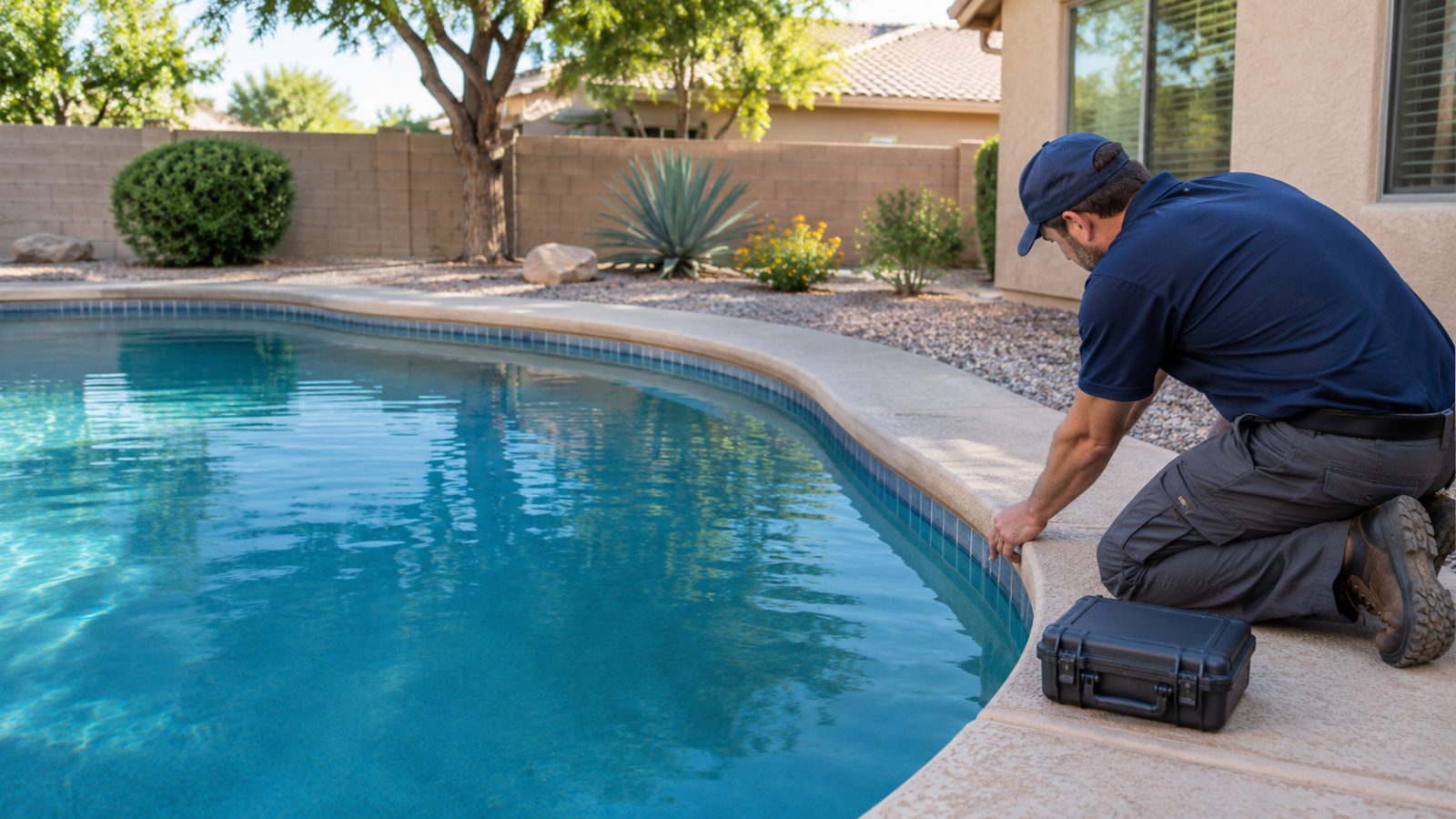
Chandler Pool Leak Diagnostics
Pool Leak Detection in Chandler, Arizona
Stop guessing about missing pool water. Get a Free Estimate
Chandler Pool Leak Diagnostics
Stop guessing about missing pool water. Get a Free Estimate
If you are constantly adding water to your swimming pool, the first question is whether the loss is normal evaporation or an actual leak. Chandler's dry climate can cause substantial evaporation, particularly during the hottest months. However, persistent water loss, unusual wet areas, air in the circulation system, or a pool that drops to the same level repeatedly may indicate an issue that deserves professional investigation.
At Pool Leak Detection Chandler, we approach leak detection as a step-by-step diagnostic process. We consider your pool's water-loss pattern, the condition of its visible components, and the way its plumbing operates. Depending on the situation, an investigation may involve visual examination, dye testing, isolation of plumbing lines, or pressure testing. Our goal is to identify useful evidence, explain the results, and help you avoid paying for repairs based on assumptions.
A reliable investigation starts with the symptoms rather than immediately assuming that the shell or underground plumbing is damaged. We ask when the problem began, whether the water loss changes while the pump runs, and whether you have noticed changes near the skimmer, equipment pad, fittings, or surrounding deck. A pool that loses water faster with the pump operating may point toward a different set of possibilities than a pool that leaks at a similar rate with the system off. These clues help prioritize testing, although they do not prove the location of a leak on their own. Our preferred approach is to move from accessible observations toward more involved testing when the situation calls for it. This reduces unnecessary disruption and gives the customer a clearer picture of why each step matters. We also consider the possibility of more than one leak, especially when symptoms do not line up with a single location.
Before assuming that water loss means a damaged pool, it helps to compare it with evaporation. A bucket test uses pool water and a reference water level to see whether the pool drops faster than water exposed to similar weather conditions. The test is most useful when performed carefully, without rain, unusual splashing, or automatic filling changing the results. In Chandler, heat, wind, water temperature, and uncovered water features can increase evaporation. We help customers understand what the test indicates and why an unusual result may justify further investigation. A bucket test can establish that water loss needs attention, but it cannot locate the leak.
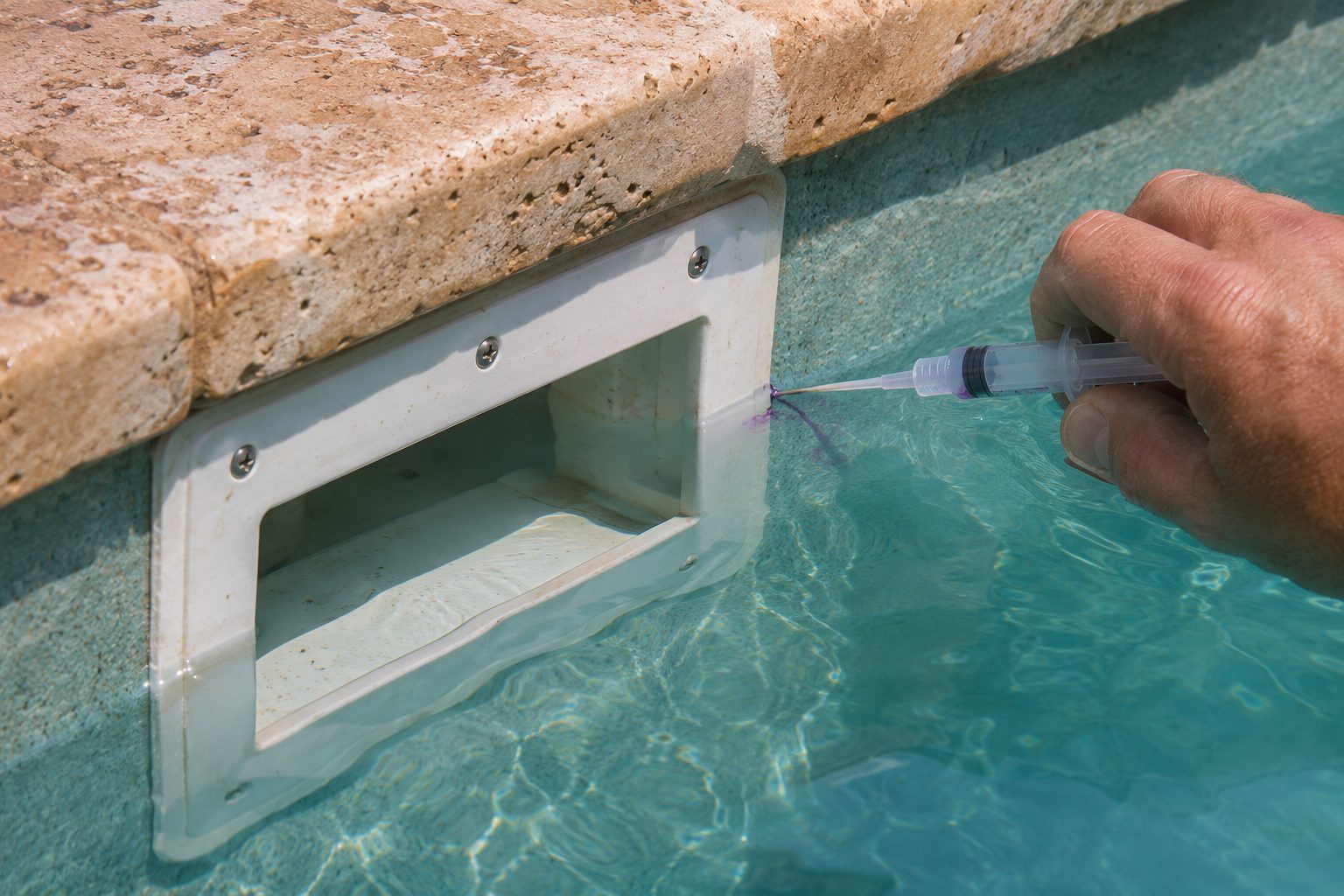
The pool shell contains several transitions where materials meet, including return fittings, lights, skimmers, and other penetrations. These locations deserve careful attention when a pool is losing water. A visible crack or gap may be suspicious, but its appearance alone does not establish that it is leaking. When appropriate, dye testing can help reveal water movement near a suspected opening. We examine the surrounding area and compare the results with the customer's reported water-loss pattern. This helps distinguish a likely leak point from ordinary cosmetic wear that may not require a water-loss repair.
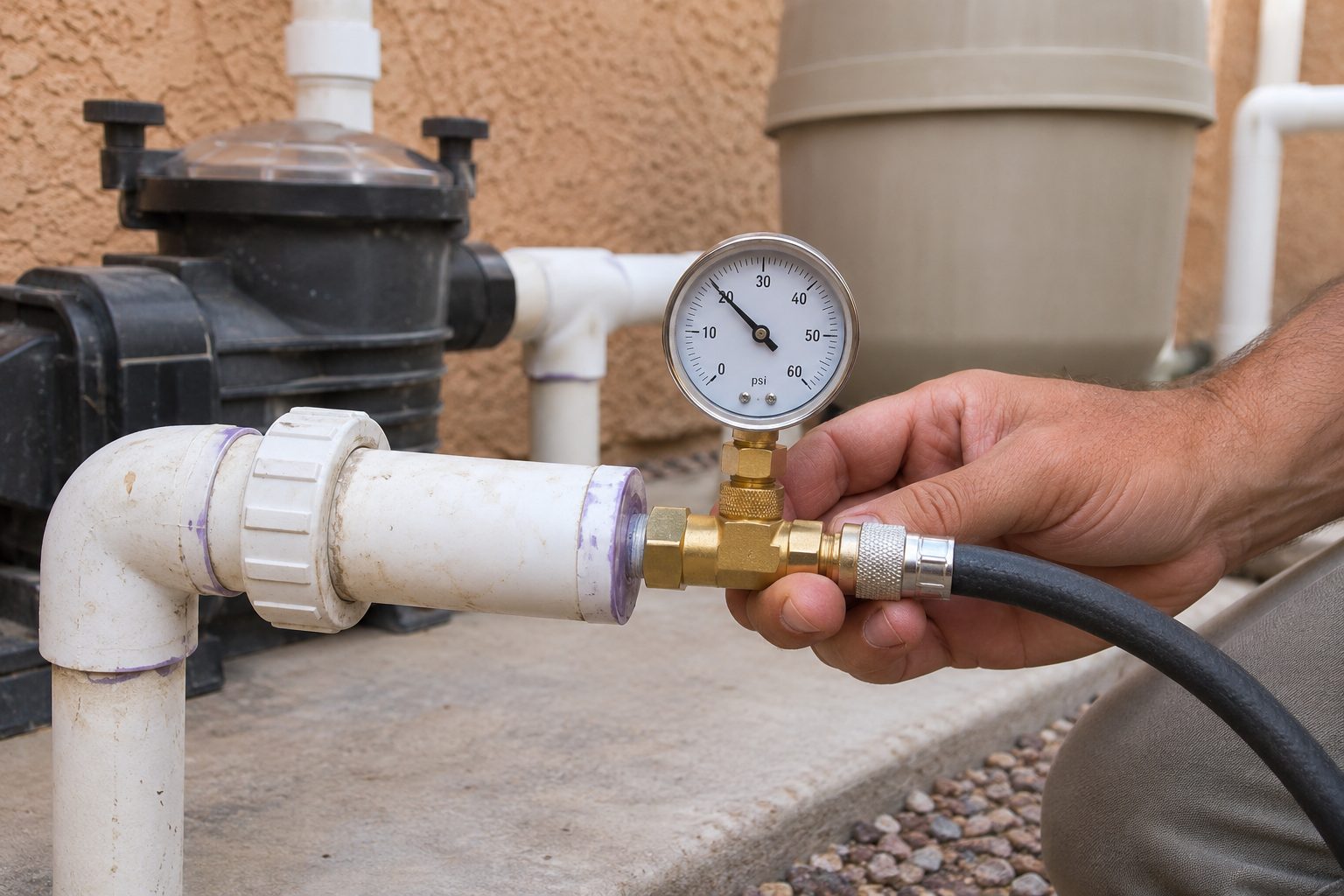
A swimming pool contains suction and return lines that move water between the pool and equipment. Some lines are buried beneath decking, landscaping, or soil, making leaks difficult to identify visually. Underground plumbing may require isolation and pressure testing to determine whether a particular line maintains pressure. If test results suggest a plumbing issue, the next step is to narrow the problem as much as practical before considering access or repair. We explain what a pressure result does and does not establish. The objective is to avoid disturbing large areas of property without a reasonable reason.
Not every pool leak is hidden underground. Pumps, filters, valves, unions, and connecting fittings can develop water loss that becomes noticeable only while equipment is operating. Some leaks are obvious, while others create slow dripping or damp patches that are easy to miss. We review accessible equipment connections and operating conditions as part of a focused investigation. When the source is visible, a targeted component repair may be more practical than extensive leak detection. We also look for signs of air entering suction plumbing, since these symptoms can point to connection issues that deserve attention.
A pool that consistently drops to a similar level can provide a useful clue. The stopping point may correspond to a skimmer connection, fitting, tile-line feature, or another pool penetration. However, a stable water level is not a guarantee that the leak is exactly at that height. We consider water-level observations together with the pool design and other testing. This is especially important for pools connected to elevated spas, fountains, overflow systems, or automatic fillers, where movement between connected bodies of water can complicate the picture.
| Service | Estimated Cost | Average |
|---|---|---|
| Initial pool leak investigation | Quoted by pool and scope | No fixed average |
| Focused dye or fitting evaluation | Depends on access and testing | No fixed average |
| Multi-line plumbing pressure testing | Depends on number of lines | No fixed average |
| Complex pool and spa leak investigation | Custom evaluation | No fixed average |
These entries describe pricing factors, not confirmed local price averages or published company rates. Final costs depend on the investigation scope, pool configuration, access, and required testing. Request a specific quote before authorizing work.
We believe the problem should be investigated before major repair work is considered. A clear diagnosis can help prevent unnecessary expenses.
We match testing methods to the symptoms and pool configuration rather than assuming every pool needs the same investigation.
We explain likely causes, meaningful findings, and remaining uncertainties in terms that pool owners can understand.
Our approach considers the evaporation and operating conditions common to Chandler and surrounding Arizona communities.
Get answers about your pool's unexplained water loss. Contact Pool Leak Detection Chandler to discuss testing options.
Free — no obligations
Tell us how frequently you add water, when the problem started, and whether you notice wet areas, equipment changes, or unusual water-level behavior.
We examine the relevant pool features and accessible equipment while considering the reported symptoms and operating conditions.
Depending on the situation, this may include focused dye testing, plumbing isolation, pressure testing, or other suitable leak investigation methods.
We discuss what the testing indicates, what remains uncertain, and whether further investigation is justified.
We explain practical repair considerations and help you understand the likely scope before any additional work is authorized.