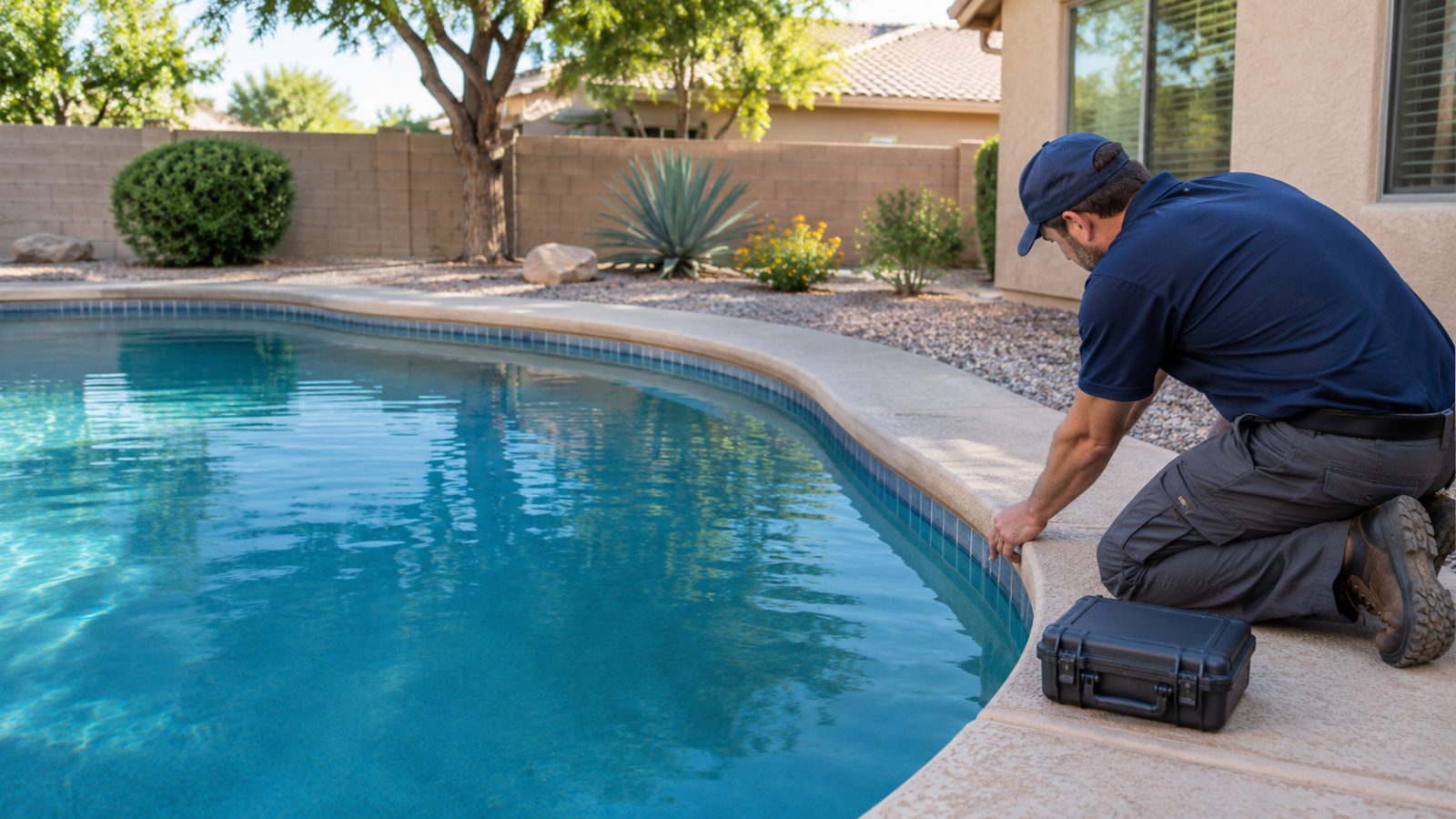
Pool Shell and Leak Repair
Pool Leak and Structural Crack Repair
Understand the damage and explore the right repair. Get a Free Estimate
Pool Shell and Leak Repair
Understand the damage and explore the right repair. Get a Free Estimate
A crack in your swimming pool can be unsettling, especially when the water level is dropping at the same time. But not every crack is a leak, and not every leaking crack represents the same type of structural problem. Surface finishes can develop cosmetic cracks, while deeper movement or damage may affect the underlying pool shell. The correct repair depends on understanding which condition is present.
Pool Leak Detection Chandler helps pool owners investigate confirmed or suspected leaking cracks and plan appropriate repair work. We evaluate the visible damage, consider evidence of water movement, and distinguish localized sealing needs from situations that may require structural assessment. We do not recommend simply covering a crack and hoping the underlying problem disappears.
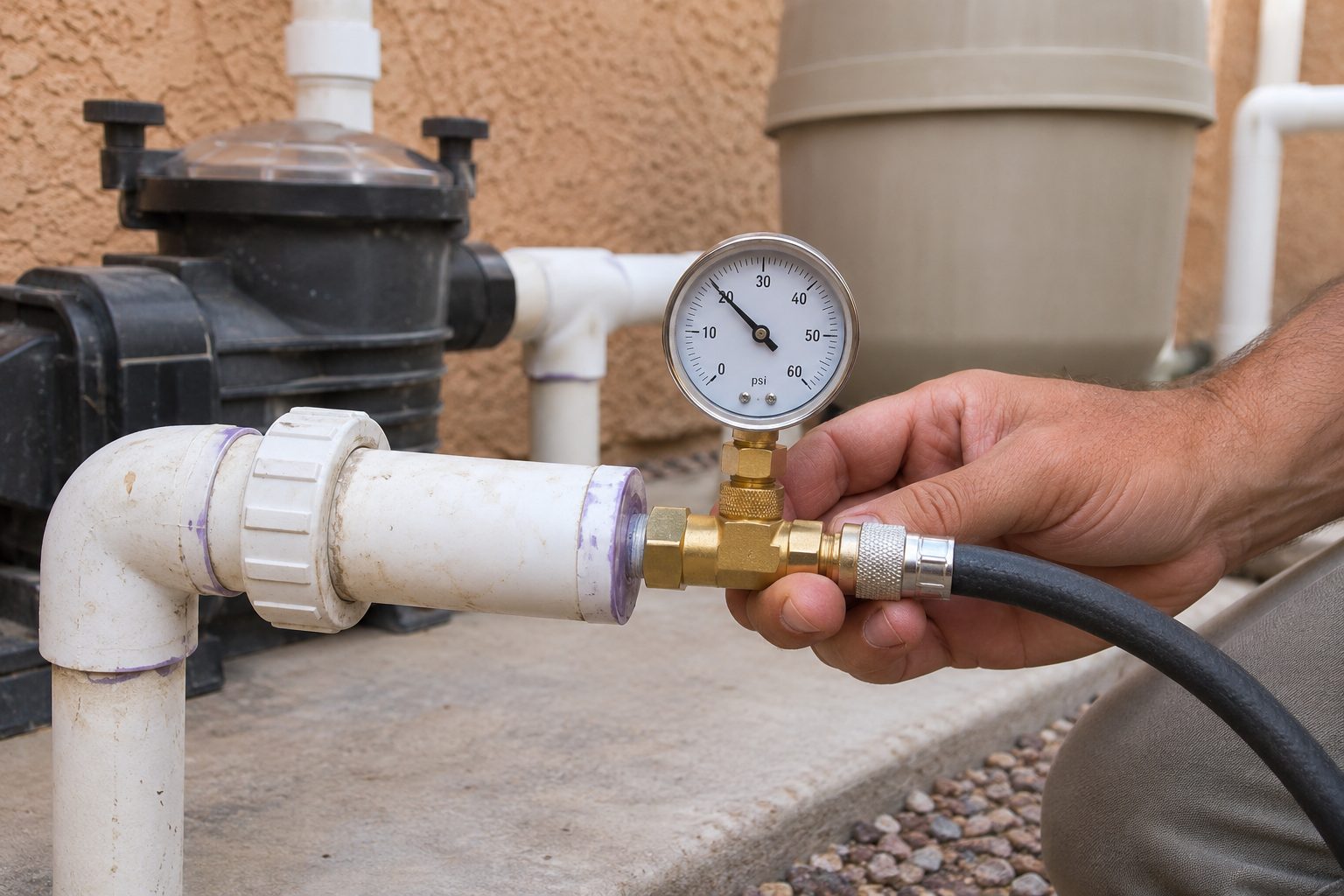
Pools are built with different structural systems, finishes, and plumbing penetrations. Concrete and gunite pools can show changes in plaster, tile, or the underlying shell over time. Soil movement, construction conditions, age, and other factors may contribute to cracking, but the cause cannot be confirmed from appearance alone. A sound repair plan begins with identifying whether the crack is actively leaking and how far the damage extends. Some repairs involve localized sealing or surface restoration. Others require a qualified structural evaluation, engineered repair design, or work beyond a simple leak patch. We aim to help customers understand the difference before they commit to a repair that may not address the actual issue.
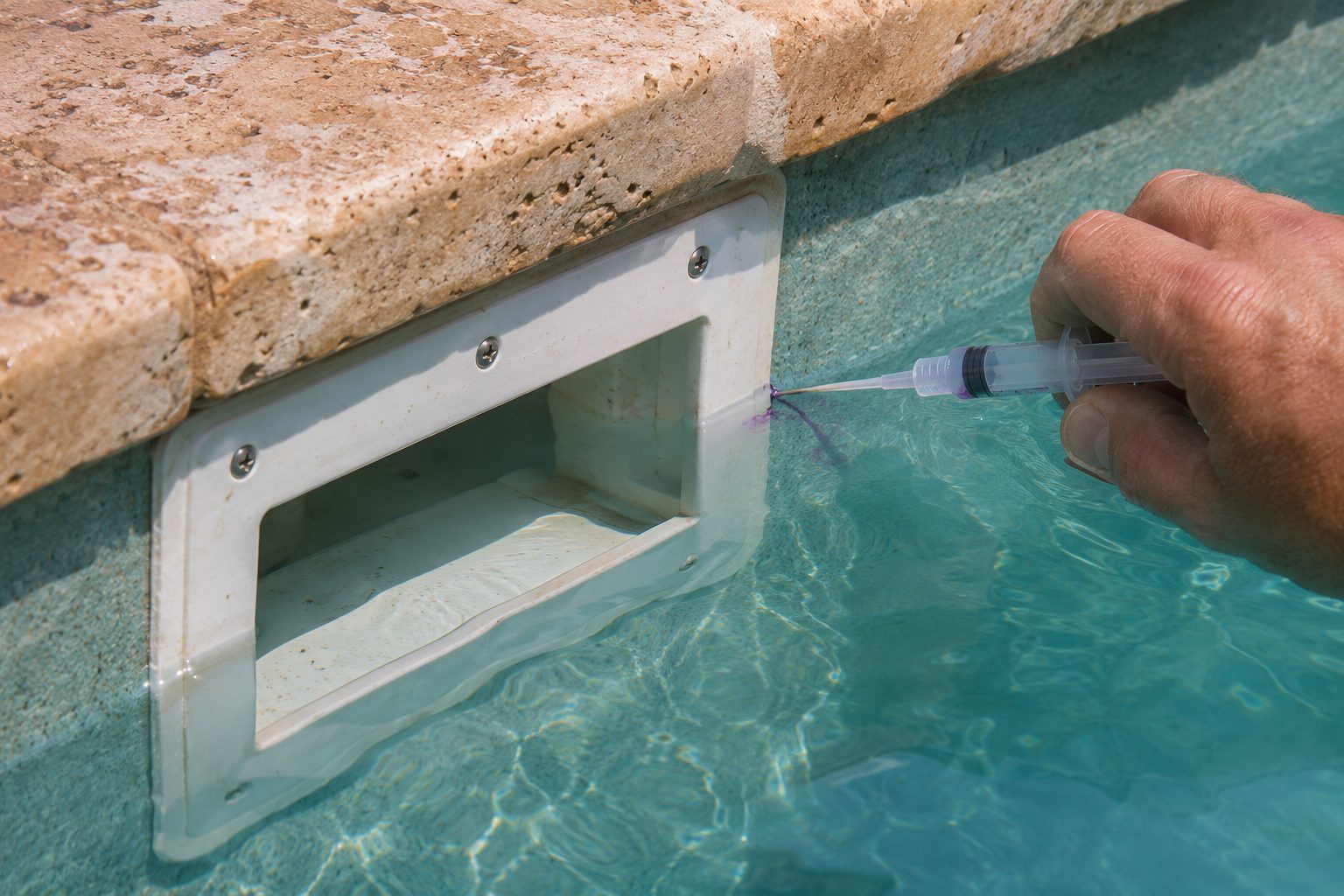
A visible crack can be checked for signs of active water movement when conditions allow. Dye testing and inspection of surrounding surfaces may provide evidence, while the pool's water-loss history helps establish whether the location is a likely source. Cracks near corners, transitions, steps, and fittings deserve context-specific evaluation. We distinguish suspected leaks from confirmed findings whenever possible. If the evidence is inconclusive, we explain what additional investigation may be useful. This prevents a cosmetic crack from being automatically blamed for a plumbing problem somewhere else.
Some localized leaks can be addressed with repair methods selected for the material, location, and expected movement. The surface must be properly assessed and prepared, and the repair product must be suitable for the pool environment. A material that works for a minor surface defect may not be appropriate for a moving structural crack. We discuss the likely limitations and durability considerations of the proposed method. The objective is a repair that addresses the water path rather than a temporary cosmetic cover that gives the appearance of completion.
A crack that widens, changes over time, shows displacement, or is associated with significant water loss deserves particular attention. Such conditions may require input from a qualified structural engineer or other appropriately qualified specialist. Leak detection alone cannot establish whether a pool shell remains structurally sound. We help identify observable concerns and discuss the need for additional professional evaluation when warranted. Any structural repair should be based on an appropriate understanding of the damage, relevant site conditions, and the necessary repair design.
Water can escape around penetrations and transitions even when the surrounding pool shell is in generally good condition. Fittings, light niches, tile-line details, and changes between materials can create potential leak paths. Proper diagnosis matters because these defects may call for different materials and access methods. We evaluate the affected area and discuss localized repairs when supported by the findings. If a repair requires lowering the water level or temporarily changing pool operation, those requirements should be understood before work begins.
After a leak repair, water-level monitoring helps determine whether the original symptoms have improved. The pool may still lose water to normal evaporation, and an automatic fill system can make comparisons difficult unless its operation is accounted for. We encourage customers to track the water level and report continued unusual loss. If water loss persists, it may indicate an incomplete repair, another leak point, or a separate condition requiring investigation. A meaningful outcome depends on results, not only the appearance of the repaired surface.
| Service | Estimated Cost | Average |
|---|---|---|
| Localized leak sealing | Quoted by location and material | No fixed average |
| Pool fitting or penetration repair | Based on access and condition | No fixed average |
| Crack investigation | Based on inspection scope | No fixed average |
| Structural repair project | Individual assessment required | No fixed average |
Crack repair costs cannot be reliably estimated from a photograph or crack length alone. Structural concerns may require an independent engineering assessment. Testing, engineering, restoration, and repair costs should be clarified in the project scope.
We focus on verifying the source of water loss before recommending a repair method.
We recognize the difference between surface defects, active leaks, and conditions requiring structural expertise.
We explain the proposed work, preparation requirements, and possible limitations.
Water-level behavior after a repair matters. We encourage appropriate monitoring rather than assuming every visible patch resolves the entire problem.
Have a leaking crack or damaged pool surface? Tell us what you are seeing and request a repair assessment.
Free — no obligations
We discuss the crack's location, history, visible changes, and whether the pool is losing water.
Appropriate inspection or testing helps determine whether the damaged area is a likely active leak.
We consider the material, access, movement, and whether specialist structural input is needed.
We describe the repair scope, preparation, limitations, and relevant follow-up requirements before work proceeds.
Water-level observations and visible condition checks help evaluate whether the original leak symptoms have improved.